

Wheel
A wheel is a rotating component that is intended to turn on an axle bearing. The wheel is one of the key components of the wheel and axle which is one of the six simple machines. Wheels, in conjunction with axles, allow heavy objects to be moved easily facilitating movement or transportation while supporting a load, or performing labor in machines.
-
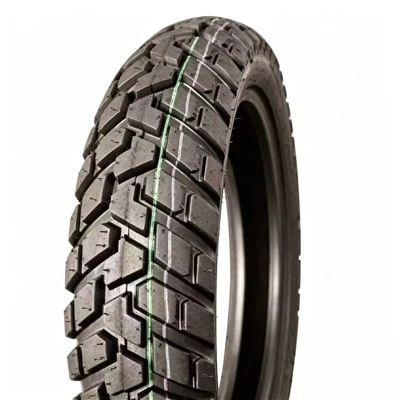
120/80-16 Motorcycle Tire GS-116
120/80-16 Off Road Motorcycle Tire Wear Resistant Rubber Tyre Wholesale High Quality OEM Custom Logo
-
110/90-16 Motorcycle Tire GS-079
110/90-16 Off Road Motorcycle Tire Wear Resistant Rubber Tyre Wholesale High Quality OEM Custom Logo
-
110/90-16 Motorcycle Tire GS-066F
110/90-16 Off Road Motorcycle Tire Wear Resistant Rubber Tyre Wholesale High Quality OEM Custom Logo
-
110/90-16 Motorcycle Tire GS-066D
110/90-16 Off Road Motorcycle Tire Wear Resistant Rubber Tyre Wholesale High Quality OEM Custom Logo
-
110/90-16 Motorcycle Tire GS-066C
110/90-16 Off Road Motorcycle Tire Wear Resistant Rubber Tyre Wholesale High Quality OEM Custom Logo
-
110/90-16 Motorcycle Tire GS-066B
110/90-16 Off Road Motorcycle Tire Wear Resistant Rubber Tyre Wholesale High Quality OEM Custom Logo
-
110/90-16 Motorcycle Tire GS-066A
110/90-16 Off Road Motorcycle Tire Wear Resistant Rubber Tyre Wholesale High Quality OEM Custom Logo
-
110/90-16 Motorcycle Tire GS-066
110/90-16 Off Road Motorcycle Tire Wear Resistant Rubber Tyre Wholesale High Quality OEM Custom Logo
-
110/90-16 Motorcycle Tire GS-065
110/90-16 Off Road Motorcycle Tire Wear Resistant Rubber Tyre Wholesale High Quality OEM Custom Logo
-
110/90-16 Motorcycle Tire GS-064B
110/90-16 Off Road Motorcycle Tire Wear Resistant Rubber Tyre Wholesale High Quality OEM Custom Logo
-
110/90-16 Motorcycle Tire GS-064
110/90-16 Off Road Motorcycle Tire Wear Resistant Rubber Tyre Wholesale High Quality OEM Custom Logo
-
110/90-16 Motorcycle Tire GS-062
110/90-16 Off Road Motorcycle Tire Wear Resistant Rubber Tyre Wholesale High Quality OEM Custom Logo



Advantages of Wheel
Improved fuel efficiency
Your wheels will not usually work properly together if they are not aligned correctly. As a result, the engine has to work harder due to increased rolling resistance, decreasing your car’s fuel efficiency. In fact, a misaligned car can drop gas mileage by as much as 10%.
Longer tire life
Tires are one of the most critical parts of your vehicle. Putting off wheel alignments until the last minute may result in your car needing new tires more often.
Improved vehicle steering
Steering your car is often more difficult when the wheels are out of alignment. The misalignment of your vehicle may require you to hold the steering wheel at an uncomfortable angle in order to steer properly.
Smoother ride
Misaligned wheels often fight against one another and even drag while you drive. As a result, you can feel the effects directly while driving.
Why Choose Us
Quality assurance
We have 100% quality guarantee to customers. We will be responsible for any quality problem.
Customized services
We understand that each customer has unique manufacturing needs. That’s why we offer customization options to cater to your specific requirements.
Competitive price
We offering a higher-quality product or service at an equivalent price. As a result we have a growing and loyal customer base.
After-sale service
Professional and thoughtful after -sales team, let you worry about us after -sales intimate service, strong after -sales team support.
Types of Wheel
Steel wheels
Steel wheels are used as standard on many low cost vehicles. Made from iron and carbon its a hard metal to give strength but also are heavier compared to aluminium. Hub caps are often used to improve the aesthetics of the steel wheel.
Alloys
Alloy wheels are lighter than the steel wheel, they used to be reserved for more premium vehicles but they are now used on most hatchbacks. Alloys use unsprung mass to help with handling by allowing the suspension to interact with the road surface.
Multi piece wheels
Wheels can be constructed by sealing two or three components together made up of the wheel face and the rim. Screwing and sealing these parts together can make them heavier and slightly weaker.
Forged wheels
Forged wheels are typically very strong, they are made by subjecting aluminium to a high heat and crushing it into shape. This makes the wheels light and strong.
Bargain wheels
There are many bargains on the internet replicating and reproducing wheels. Be careful when thinking of buying imitation wheels as they are often made cheap and could lack important strength.
Materials Used in Wheel
Alloy (aluminum alloy)
Aluminum alloy wheels are among the most popular. They are lightweight, offer good heat dissipation, and provide high strength and corrosion resistance. Alloy wheels are commonly used to enhance both the performance and appearance of vehicles.
Steel
Steel wheels are known for their strength and durability. They are suitable for some off-road and utility vehicles, capable of handling heavy loads and harsh road conditions.
Forged aluminum alloy
Forged aluminum alloy wheels are manufactured through a forging process, resulting in a stronger and lighter wheel compared to cast aluminum. These wheels are often used in high-performance vehicles and racing cars.
Magnesium alloy
Magnesium alloy wheels have a very low density, providing a lightweight option. However, due to high costs, they are typically used in high-performance racing cars and specific applications.
Carbon fiber
Carbon fiber wheels are extremely lightweight and have high strength. They are often used in high-performance and supercars. However, they tend to be expensive.
Composite materials
Some wheels use composite materials, combining different materials to achieve superior performance and lightweight characteristics.
The wheel disc or rim
- This is metallic and can be made of different materials and have different shapes, but basically, it is a tube and the rest of the elements of the wheel are placed on it. These other elements are attached to it through bolts and nuts.
- For tubeless tyres, there must be a proper fitting between the tyre and the rim. The car wheel rim is made of a strong material such as steel so that it can take the load of a car. The car’s size determines the width and the diameter of the rim. Moreover, you can also get customised car wheel rims as they come in different colours and styles.
The valves
The car tyre valve is one of the key car wheel parts that helps in inflating and deflating the car tyres. The air or nitrogen necessary to fill the chamber is introduced through it or it is removed if an excessive amount has been put in. When closed, this valve keeps the air or nitrogen inside, preventing it from escaping to the outside. It is, therefore, a key element to maintain tyre pressure and driving safely.
The mechanism of the valve is integrated with a tyre pressure monitoring system which helps drivers to understand the pressure condition.
The hubcaps
- Some wheels have a trim known as a hubcap. Sometimes this hides the nuts or bolts of the rim. In principle, its purpose is merely decorative, although it also helps to keep the rim clean of dirt particles.
- Hubcaps caps are securely fit in the hub area of your car to encounter all sorts of dust and debris. Besides, hubcaps also help in increasing the lifespan of your wheel by protecting wheel nuts and bolts from corrosion.
- The hubs in the car wheel allow it to take turns. It also maintains the wheel speed sensor and plays an important role in the braking, steering and traction of your vehicle.
Counterweights
Another part of a wheel is the counterweights. In fact, it is an element that some people are unaware of but that is essential for safe driving. These counterweights are small in size and are usually made of lead. These are placed on the rims and their main purpose is to balance all four wheels and prevent vibrations while driving.
The tyre
- Last but not the least, tyres are actually one of the most crucial parts of a car wheel system. Because without tyres, the rim, the valve and the counterweights it is of little use. Also, it is one with the highest volume.
- The job of car tyres is to provide traction and cushion the shock with the help of suspension and shock absorber. Tyres also cover rims from touching the ground.
- The tread in car tyres is the outermost part that comes with a tread pattern. If you want to check the tyre tread depth, you can use a coin or follow this guide.
- This part of the car wheel is made of rubber, although the materials used for its manufacture can vary – ranging from carbon black to textile fibre and mineral components.
How to Choose Wheel
Wheel size
There are two ways of choosing a wheel size. The simpler and more straightforward method is to go for the same size as stock wheels so you can use the same tires as well. This way you simply have to refer to your tire size and buy rims matching to original size. You can refer to this guide on how to read tire sidewall specifications. The second method involves taking various measurements to get the perfect fitment wheels and tires for your vehicle. If performing the measurements yourself, make sure to remove the tire from the wheel first as they need to be made with the tire uninstalled for accurate readings.
Wheel diameter
The first thing to measure is the wheel diameter, which is measured across the face of the wheel, excluding the wheel lips (which are only used to hold the tire in place). Diameters for rims can vary from 10 inches all the way up to 30 inches. When choosing a larger wheel diameter it is important to understand that the tire sizes need to be altered to maintain the same overall diameter of the wheel and tire combined. This is done to maintain the factory’s overall diameter, which is the height of the wheel and tire combined. The speedometer, abs, traction control, depends on this overall height to work properly.
Wheel width
The width of the wheel determines the contact patch of the tire. An overly wide wheel can cause issues while mounting by contacting the fender, suspension, steering, or brake components. While an increased contact patch is good for handling, it can cause hydroplaning which can reduce vehicles’ ability to drive over wet roads along with reduced snow traction. When increasing the wheel diameter you also need to increase the width of the wheel and get appropriate tires for the width.
Wheel offset and backspacing
The wheel offset is the distance from the hub mounting surface to the centerline of the width of the wheel. There are three types of wheel offsets: Negative, positive, and zero. Generally, cars come with zero or slightly negative offset wheels. A slight variation in the offset (≤1 inch) can increase handling characteristics, but major deviations can cause serious problems. It is important to choose the right wheel offset as it can alter suspension geometries and induce extra stress on various suspension, steering, and driveline components. Increasing the offset can also result in tire or wheel rubbing, which means the tire or wheel can contact the components found under the fender.
Bolt pattern
One of the most important things to consider is the bolt pattern. It is the number of studs or nuts the wheel has and the pattern or configuration it is arranged in. It is also referred to as pcd or pitch circle diameter. Without the right bolt pattern, you cannot mount the wheel to your car, so matching the bolt pattern to your factory wheels is necessary. You can find the bolt pattern specification on the wheel or the vehicle owner’s manual. It usually comes as two numbers, for example, 5×160; where 5 is the number of bolts and 160 is the distance in mm between the center point of two bolts. You can find more information regarding the wheel bolt pattern and how to calculate it in this guide.
Hub-centric
Factory rims are hub-centric, which means the wheel is precisely mounted on the hub. In a hub-centric connection, the weight of the vehicle is supported by the hub and wheel and not the lug nuts. The lug nuts merely secure the wheel to the hub mounting plate. Always choose wheels with a hub-centric connection as it eliminates the chance of lug nut shearing and the subsequent vibrations as well as safety hazards.
Lug nut style and stud length
The lug nuts and bolts are often overlooked, but they hold a lot of importance. Lug nuts come in different sizes and styles like hex, mag type hex, hex spherical seat, hex conical seat, etc. The lug stud length can also vary depending on the size of the wheel and hub plate. Choose the right type, size, and style of lug nut and bolt for your rims to ensure precise and sturdy mounting.
Why Maintain Your Wheels
Safety
A damaged or worn wheel can compromise your vehicle's handling and stability, increasing the risk of accidents or loss of control. Loose or missing bolts can cause your wheels to wobble or even come off, which is extremely dangerous.
Performance
Worn or misaligned wheels can cause your vehicle to pull to one side, vibrate or shake, and negatively affect your steering and braking performance. On the other hand, properly maintained wheels can improve your vehicle's handling, stability, and fuel efficiency.
Durability
Your wheels are exposed to harsh conditions, including extreme temperatures, road salt, and debris. Without proper maintenance, your wheels can develop corrosion, cracks, or other forms of damage, which can reduce their lifespan and lead to costly repairs or replacements.
Appearance
Let's face it, a set of clean, shiny wheels can make your vehicle look really good! Regular cleaning and maintenance can help preserve the appearance of your wheels and make them look like new ones for longer.
Our Factory
Our company mainly produce various kinds of models of wheel barrows, tool carts for garden use, all sorts of pneumatic and semi-pneumatic rubber wheels, PU wheels, and solid wheels.


Certifications


FAQ
As one of the leading wheel manufacturers and suppliers in China, we warmly welcome you to buy high quality wheel at low price from our factory. For free sample and cheap products, contact us now.
Useful Plastic Wheel, PU Foam Wheel, ATV Spindle Mount Drag Wheels