

Motorcycle Tire
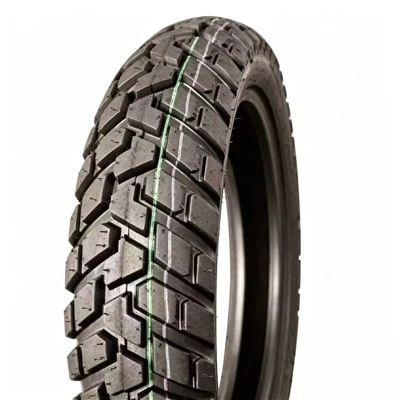
A motorcycle tyre is the outer part of motorcycle wheel, attached to the rim, providing traction, resisting wear, absorbing surface irregularities, and allowing the motorcycle to turn via countersteering. The two tyres' contact patches are the motorcycle's connection to the ground, and so are fundamental to the motorcycle's suspension behaviour, and critically affect safety, braking, fuel economy, noise, and rider comfort.
-
120/80-16 Motorcycle Tire GS-116
120/80-16 Off Road Motorcycle Tire Wear Resistant Rubber Tyre Wholesale High Quality OEM Custom Logo
-
110/90-16 Motorcycle Tire GS-079
110/90-16 Off Road Motorcycle Tire Wear Resistant Rubber Tyre Wholesale High Quality OEM Custom Logo
-
110/90-16 Motorcycle Tire GS-066F
110/90-16 Off Road Motorcycle Tire Wear Resistant Rubber Tyre Wholesale High Quality OEM Custom Logo
-
110/90-16 Motorcycle Tire GS-066D
110/90-16 Off Road Motorcycle Tire Wear Resistant Rubber Tyre Wholesale High Quality OEM Custom Logo
-
110/90-16 Motorcycle Tire GS-066C
110/90-16 Off Road Motorcycle Tire Wear Resistant Rubber Tyre Wholesale High Quality OEM Custom Logo
-
110/90-16 Motorcycle Tire GS-066B
110/90-16 Off Road Motorcycle Tire Wear Resistant Rubber Tyre Wholesale High Quality OEM Custom Logo
-
110/90-16 Motorcycle Tire GS-066A
110/90-16 Off Road Motorcycle Tire Wear Resistant Rubber Tyre Wholesale High Quality OEM Custom Logo
-
110/90-16 Motorcycle Tire GS-066
110/90-16 Off Road Motorcycle Tire Wear Resistant Rubber Tyre Wholesale High Quality OEM Custom Logo
-
110/90-16 Motorcycle Tire GS-065
110/90-16 Off Road Motorcycle Tire Wear Resistant Rubber Tyre Wholesale High Quality OEM Custom Logo
-
110/90-16 Motorcycle Tire GS-064B
110/90-16 Off Road Motorcycle Tire Wear Resistant Rubber Tyre Wholesale High Quality OEM Custom Logo
-
110/90-16 Motorcycle Tire GS-064
110/90-16 Off Road Motorcycle Tire Wear Resistant Rubber Tyre Wholesale High Quality OEM Custom Logo
-
110/90-16 Motorcycle Tire GS-062
110/90-16 Off Road Motorcycle Tire Wear Resistant Rubber Tyre Wholesale High Quality OEM Custom Logo



Advantages of Motorcycle Tire
Safety
Quality tires provide better grip and braking capability, ensuring safer riding in emergency situations and on slippery roads.
Riding comfort
Quality tires can enhance riding comfort by providing a smoother ride and reducing vibrations, which is crucial for long-distance journeys.
Durability
Quality tires offer a longer lifespan and may require less frequent replacement, leading to cost savings.
Fuel efficiency
Tires with lower rolling resistance, often found in quality tires, can improve fuel efficiency, resulting in lower fuel costs.
Why Choose Us
Quality assurance
We have 100% quality guarantee to customers. We will be responsible for any quality problem.
Customized services
We understand that each customer has unique manufacturing needs. That’s why we offer customization options to cater to your specific requirements.
Competitive price
We offering a higher-quality product or service at an equivalent price. As a result we have a growing and loyal customer base.
After-sale service
Professional and thoughtful after -sales team, let you worry about us after -sales intimate service, strong after -sales team support.
Types of Motorcycle Tire
Street tyres
These are the tyres that most everyday motorcycles come equipped with. Focusing primarily on durability and reliability, these tyres aren't the grippiest but come at a very reasonable price and last very long. For most of your commuting needs, these tyres are just fine. They can also handle the occasional intercity trip as long as you don't wish to use them too aggressively around corners or in too wet or slippery conditions.
Dual sport or adv tyres
While most motorcycles spend over 90 per cent of their time on the blacktop, some are meant to take the rough with the smooth. As they are often known, adventure or dual-sport motorcycles should take tarmac and uneven, unpaved surfaces into their stride. Designed for riders who love venturing into the unknown and often travel long distances, these motorcycles are big, powerful and rugged.
Touring tyres
Touring motorcycles are generally heavy, as they are sturdily built to take the rider's weight and pillion along with all their luggage. Heavy cruiser motorcycles are an example of what a touring motorcycle appears like. Thesetouring tyres are often heavy and come with deep, unique tread patterns which offer them the capability to dispel water effectively. Tyres come with a reinforced sidewall to last long, as touring motorcycles are meant to log very high mileage to handle the additional weight.
Sport / performance tyres
These tyres offer the highest possible grip and performance in dry conditions for most street-legal motorcycles. These tyres are made with high quality, soft compound rubber, which focuses relentlessly on maximum grip and weight savings to keep the unsprung weight of the motorcycle low. Top tier performance motorcycles, dishing out crazy amounts of power and oriented towards aggressive use, often come equipped with this tyres class. The soft compound rubber on these tyres means that they wear out quickly and frequently replace them. The tread lines on these tyres are not very pronounced, so they are not very good at dispersing water. There are unique variations of these sports tyres for wet weather conditions, which come with deeper and specialised tread patterns to dispel water more effectively and offer optimum grip.
Sport touring tyres
A variation of the touring genre is sport touring, where supersport motorcycles are somewhat sobered down with a comfier riding position, cushier suspension, less aggressive engine, some seating space for a pillion and in some cases, provision for fastening luggage for long-distance touring. These motorcycles are still very sporty but can allow the rider to travel long distances without exerting too much pressure on his anatomy. The tyre industry has sport touring tyres as a solution for such motorcycles. These tyres are a mix of sport and touring tyres, where they offer the performance and grip close to sport tyres and enhanced durability and ruggedness.
Off-road tyres
Off-road tyres are designed for motorcycles meant to spend a vast majority of their lives off the tar. They are ideal for using rough surfaces and unpaved terrains comprising mud, gravel, dirt or sand. These tyres are built tough, with reinforced sidewalls to minimise the chances of a puncture. Unlike biased road tyres, which don't have very deep treads, these have very pronounced knob-like protrusions on their surfaces which help them dig deep into loose surfaces and allow the motorcycle to propel itself forward. The hard compound rubber also helps the projections protect themselves from being cut when they contact rough surfaces.
Racing tyres / slicks
While not offered on road-going motorcycles, these tyres provide the ultimate grip and are used exclusively for professional motorcycle racing. Racing tyres are made with the highest quality soft compound rubber, offering incredible grip, allowing racers to lean their motorcycles to physics-defying angles. These tyres mostly don’t have any tread lines as they are focused on maximising the contact patch at all times.
Understanding tyre types
Familiarize yourself with the different types of motorbike tyres available. Common types include street/on-road tyres, cruiser tyres, touring tyres, sport tyres, adventure/dual-sport tyres, off-road/motocross tyres, and racing/track tyres. Each type is designed for specific riding conditions and offers unique features and performance characteristics.
Consider your riding style
Assess your typical riding style and the type of terrain you frequent. Determine if you primarily ride on city streets, highways, or off-road trails. Your riding style will help you narrow down the appropriate tyre type that matches your needs.
Tyre size and compatibility
Check your motorbike's manual or the sidewall of the existing tyres to find the correct tyre size. Ensure that the chosen tyres are compatible with your bike's make and model. Using the wrong tyre size can adversely affect handling and performance.
Tread pattern and performance
The tread pattern of a tyre affects traction and handling. Consider the tread design suitable for your riding conditions. Street tyres have a smoother tread pattern for paved roads, while off-road tyres have an aggressive pattern for better grip on loose surfaces.
All-weather performance
Choose tyres that provide good grip and traction in various weather conditions, especially if you ride in wet or cold climates. Look for tyres with adequate grooves and channels for efficient water dispersion.
Load capacity and speed rating
Check the load capacity and speed rating of the tyres. Ensure they can handle the weight of your bike and any additional load, such as luggage or a pillion rider. The speed rating indicates the maximum safe speed the tyre can handle.
Budget considerations
While it's essential to invest in high-quality tyres, consider your budget when making a selection. Quality tyres typically offer better performance and durability, making them a cost-effective choice in the long run.
Brand reputation
Choose reputable tyre brands known for their quality and reliability. Indian brands like apollo tyres are widely recognized for producing high-quality motorbike tyres.
Customer reviews and recommendations
Read customer reviews and seek recommendations from fellow riders or experts. Real-world experiences can provide valuable insights into the performance and reliability of specific tyre models.
Materials Used in Motorcycle Tire
Aluminum alloy
Aluminum alloy is the most common material for motorcycle wheels. It offers a good balance of strength and lightweight properties, contributing to improved handling and overall performance.
Magnesium alloy
Magnesium alloy wheels are lightweight and possess high strength. They are used in some high-performance motorcycles to reduce unsprung mass and enhance handling. However, they tend to be more expensive than aluminum alloy wheels.
Cast iron
Cast iron wheels are relatively heavy, and they are not as common in modern motorcycles. However, they may still be found in some traditional or low-cost motorcycle models.
Carbon fiber composite
- Carbon fiber wheels are known for their exceptional strength-to-weight ratio. They are very lightweight and offer high performance, making them popular in high-end, racing, or sportbike applications. However, they are also more expensive than other materials.
- The choice of wheel material depends on factors such as the motorcycle's intended use, performance requirements, and cost considerations. High-performance motorcycles often use lightweight materials like aluminum or magnesium alloys, while more economical or traditional bikes may feature cast iron wheels. Advanced and premium motorcycles may opt for the benefits of carbon fiber composite wheels.
The Production Process of Motorcycle Tire


Mixing raw materials into usable compounds
- Natural rubber is “milky white latex” that comes from special rubber trees grown in thailand. Natural components usually produce strong smell at the production plant, because rubber is natural fat and it starting decaying when mixing process begins. On the other hand, synthetic rubber based on petroleum, doesn’t have any significant acrid smell. Each rubber type has its own advantages for the various parts of motorcycle tyre.
- Large pieces of natural and synthetic rubber start moving on a conveyor, while workers monitor the process. They also remove smaller chunks, which are unfit for tyres. Also rubber-processing equipment isn’t the only one, there are fabric-cutting units where different raw fabrics (polyester, kevlar, nylon, aramid, etc.) are similarly prepared.
Extrusion
- In this process warm rubber sheets are pushed through special machines, which forms long strips of rubber. Extrusions vary depending on the tyre components being made (including carcass and sidewall layers).
- After that steel cords are inserted in tyre carcass, they make up the tyre bead. Fabric and steel-belt plies, which were mentioned earlier, are created, and all tyre components are prepared for the final assembly.
Assembly
- Firstly, carcass assembly takes place on a large drum. Previously made carcass layer is rolled out, carefully measured and cut. Once the internal layers are formed, exterior tread layer is added.
- This process is almost fully automated, however, there is still moderate level of human interaction during the assembly. The exterior tread layer is cut and molded by a machine operator. Once exterior layer is added, tyre is removed from the drum.
Curing
- After the assembly, green tyres are moved over to curing chambers. The curing phase consists of three key elements – heat, pressure and time. In the mold chambers tyre tread pattern is applied to green tyres, they are pushed into the mold, and the tread pattern begins to get imprinted.
- Temperature is raised to 170 degree celsius (can be different for various type of tyres, up to 190 c), and chemical reactions begin to strengthen the tyre. Most bike tyres take about 15 odd minutes, but tyres for large trucks and heavy machinery may take up to 40 minutes.
Quality checks
- Tyres are checked at every step of the creation process, but the most important is the last quality check. For final check each tyre is manually checked by professionals. They verify the shape, deformation or any other defects.
- Also each tyre is checked by laser rays, to see if it is properly constructed. And finally, after that the tyre is tested on specifically designed road simulator that spins the tyre at various speeds. Usually less than 0.11% tyres do not pass these tests. Other 99.89% units are stored in large racks, waiting for worldwide distribution.
How to Maintain Motorcycle Tire
Optimal tire pressure
Different bikes might need different tire pressure for best performance. Refer to the bike’s user manual to know its optimal tire pressure and maintain it all the time. Do not postpone the task of filling the air in the bike’s tires. Riding with less tire pressure is risky.
Wash regularly
Wash the bike’s tires regularly and do not leave the task for when you plan to service the bike. Washing is especially necessary after long road trips. Those muddy paths can take a toll on the bike’s tires. If not washed properly, the bike’s tires can skid on the road due to the accumulated dirt.
Prompt repairing
Bikers often encounter that there’s a nail in the tire. If you find yourself in such a situation, avoid further riding and address the issue as soon as possible. It is suggested to not ride for a long distance with a nail in the tire. If the garage is far away, consider towing the bike to avoid damage. Also, do not ride with a pillion in this case.
Don’t persist, replace
No matter how much you want the bike’s tires to keep serving you for eternity, they are bound to lose their grip. The bike’s tires are bound to undergo wear and tear. Thus, if you sense that the bike’s tires are not gripping the road properly, maybe it is time to get the tire replaced. A tire without a strong grip can lead to accidents, especially if the road is wet.
Appropriate tires
Some bikers tend to buy fancy tires for their bikes. There have been cases where bikers have chosen a car’s tire for their bike. Others might mismatch the type of bike and the type of tire – for example, installing the tire of a dirt bike on a bike suitable for city rides. Avoid such misadventures and chose appropriate tires.
Our Factory
Our company mainly produce various kinds of models of wheel barrows, tool carts for garden use, all sorts of pneumatic and semi-pneumatic rubber wheels, PU wheels, and solid wheels.


Certifications


FAQ
As one of the leading motorcycle tire manufacturers and suppliers in China, we warmly welcome you to buy high quality motorcycle tire at low price from our factory. For free sample and cheap products, contact us now.
Customized ATV Wheel, Quick Motorcycle Tires, Big Herringbone Agricultural Tyres